
Why do some children need orthodontic treatment twice?
It's a question we hear from parents, especially when their child is recommended for braces or another orthodontic appliance before all their permanent teeth have come in.
The answer comes down to timing. Sometimes, addressing a developing orthodontic problem early can help prepare a child's teeth and jaws for the next stage of growth. Later, a second phase of treatment may be needed to align the permanent teeth and refine the bite.
This approach is called two-phase orthodontic treatment, and one of our recent patients is a great example of how these two stages can address different orthodontic needs.
Her journey with Beecroft Orthodontics began in 2017, and she recently completed Phase II treatment with Invisalign in October 2026!
What Is Phase I Orthodontic Treatment?
Phase I orthodontic treatment, also called early or interceptive orthodontic treatment, typically begins while a child still has a combination of baby teeth and permanent teeth.
Unlike comprehensive treatment, Phase I isn't necessarily about achieving perfectly straight teeth. Instead, it focuses on addressing specific concerns with jaw development, bite alignment, or the eruption of permanent teeth.
Depending on the child's needs, Phase I treatment may involve:
Palatal expanders to widen a narrow upper jaw.
Limited braces to address specific alignment concerns.
Other orthodontic appliances to manage developing bite problems.
For a more detailed explanation, visit our guide to Phase I and Phase II orthodontic treatment.
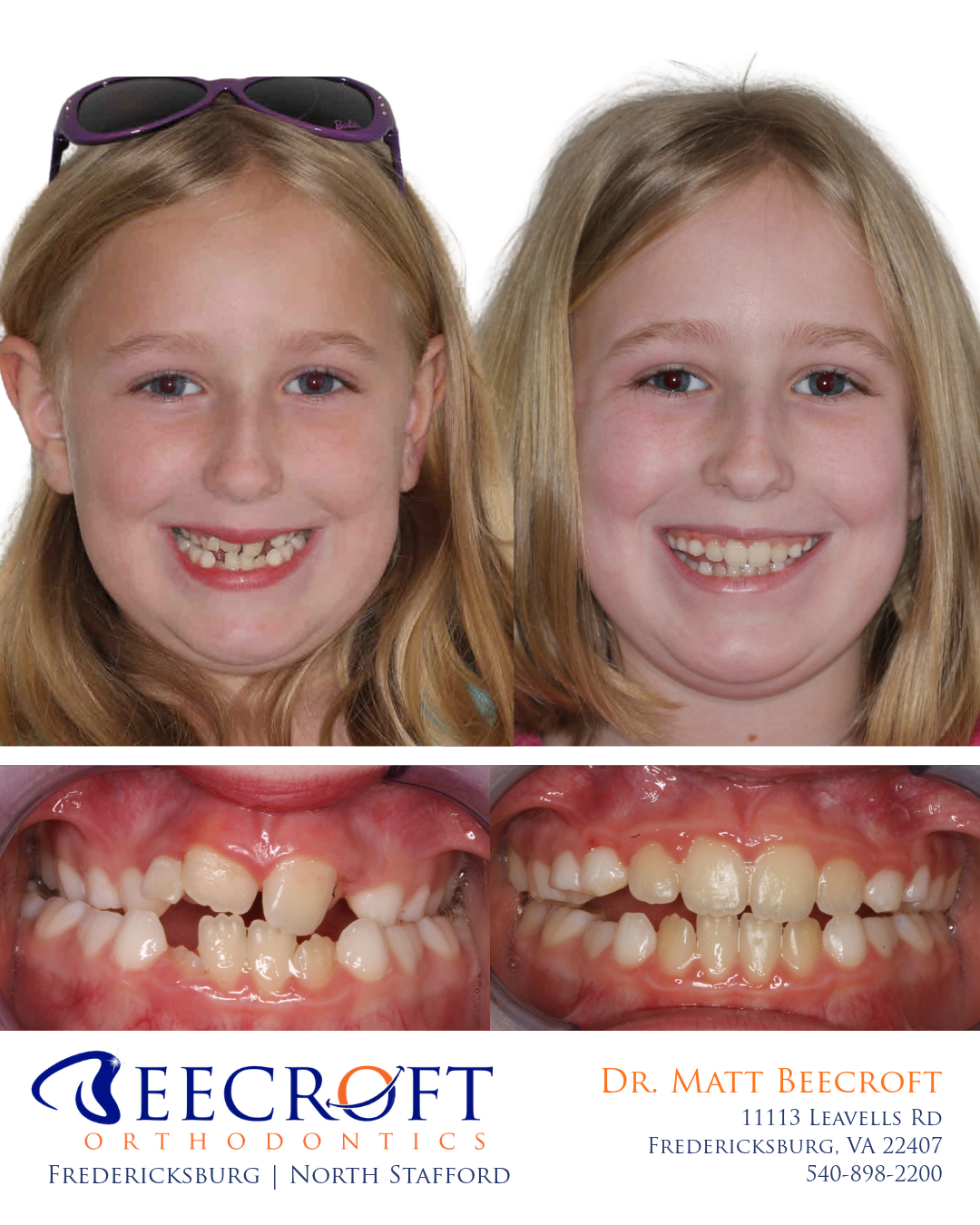
Our Patient's Phase I Journey: Starting in 2017
On January 2, 2017, our patient visited Beecroft Orthodontics for her initial orthodontic evaluation.
During her examination, Dr. Matthew Beecroft identified two significant concerns:
A narrow upper jaw (maxilla): Her upper jaw was narrower than ideal, affecting the relationship between her upper and lower teeth.
Bilateral crossbite: Her upper teeth were positioned inside the lower teeth on both sides of her mouth when biting down.
Because these concerns involved jaw development, Dr. Beecroft recommended a Phase I treatment plan consisting of an upper palatal expander and upper braces, with an estimated treatment time of 10 to 12 months.
A palatal expander is an orthodontic appliance designed to widen the upper jaw. For growing children with certain types of crossbites or narrow upper arches, expansion can help address the underlying jaw-width discrepancy.
The American Association of Orthodontists explains how palatal expanders work and why they may be recommended during childhood.
The important takeaway? Phase I treatment isn't simply about straightening teeth sooner. It's about identifying certain developing orthodontic concerns and addressing them at an appropriate stage of growth.
Why Would a Child Need Orthodontic Treatment Twice?
This is one of the biggest questions parents have about two-phase orthodontic treatment.
If a child has already received orthodontic treatment, why would they need braces or Invisalign later?
The answer is that Phase I and Phase II serve different purposes.
Phase I focuses on specific problems that may benefit from treatment during childhood. However, a child's jaws continue growing, and additional permanent teeth still need to erupt.
Following Phase I, patients often enter an observation period. During this time, the orthodontist monitors their growth, bite, and developing permanent teeth.
Once most or all permanent teeth have erupted, the orthodontist evaluates whether comprehensive treatment is necessary.
Needing Phase II treatment doesn't automatically mean Phase I was unsuccessful. The two phases may be planned to accomplish different goals at different stages of development.
What Is Phase II Orthodontic Treatment?
Phase II is the comprehensive stage of orthodontic treatment, usually beginning once most or all permanent teeth have erupted.
While Phase I may address early jaw development and specific bite concerns, Phase II focuses on aligning the permanent teeth and refining how the upper and lower teeth fit together.
Depending on the patient's needs, treatment options may include traditional braces, clear braces, or Invisalign clear aligners.
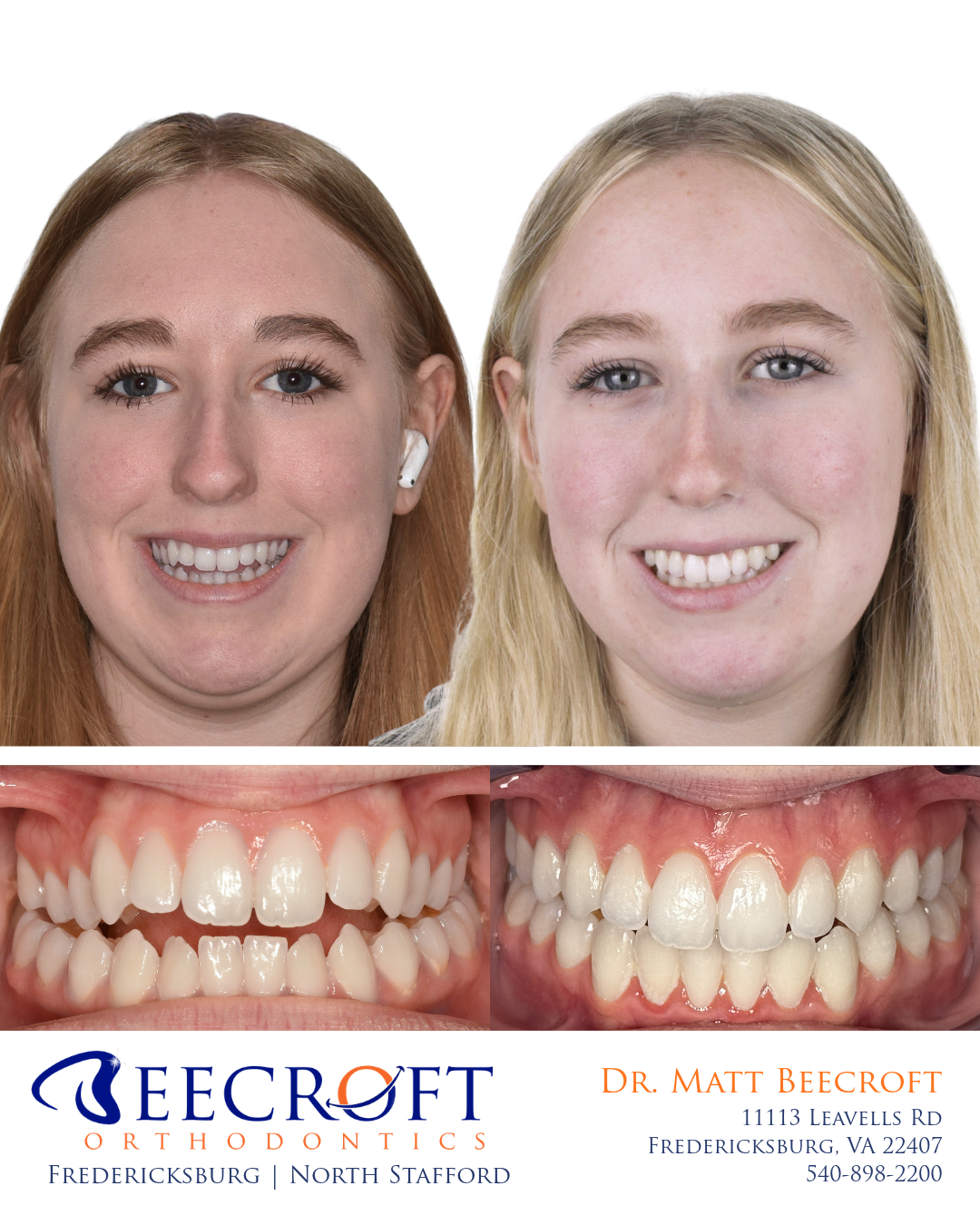
Our Patient's Phase II Journey: Invisalign
Years after her initial orthodontic evaluation, our patient returned for the next chapter of her smile journey.
At her Phase II evaluation, her orthodontic concerns included:
Class II bite relationship: A difference in how the upper and lower teeth fit together.
Mild upper and lower crowding: Limited space for her permanent teeth to align properly.
Anterior open bite: A condition where the upper and lower front teeth do not meet when the back teeth are together.
Her comprehensive treatment plan involved Invisalign, with an estimated treatment time of 18 months.
She began Invisalign treatment on March 12, 2025, and completed treatment on October 22, 2026.
From an early evaluation focused on jaw development to comprehensive Invisalign treatment years later, her orthodontic journey demonstrates how different stages of care can address different concerns as a patient grows.
Does Every Child Need Two Phases of Orthodontic Treatment?
Not at all!
Many children only need one phase of comprehensive orthodontic treatment. Some children may not require orthodontic treatment at all.
The purpose of an early orthodontic evaluation is to identify potential concerns and determine the most appropriate time to address them.
In fact, the American Association of Orthodontists recommends a child's first orthodontic evaluation no later than age 7.
That doesn't mean every 7-year-old needs braces.
By this age, an orthodontist can often identify developing problems with jaw growth, tooth eruption, or bite alignment, even when a child's smile looks relatively straight.
For some children, early treatment may be recommended. For others, the best recommendation is simply to monitor their growth until the appropriate time for treatment.
If you're wondering what to expect during your child's first appointment, you can learn more about orthodontic evaluations for children at Beecroft Orthodontics.
When Should You Schedule Your Child's First Orthodontic Visit?
Whether your child is approaching age 7, you've noticed concerns about their bite, or their dentist has recommended an orthodontic evaluation, there's no need to wait until all their permanent teeth have arrived.
At Beecroft Orthodontics, we provide individualized orthodontic care for children, teens, and adults throughout Fredericksburg, Stafford, and the surrounding Virginia communities.
Every child's smile develops differently. Our goal is to help families understand what their child needs, when treatment may be beneficial, and what to expect along the way.
Ready to learn more about your child's developing smile?
Schedule a complimentary orthodontic consultation with Beecroft Orthodontics, and let our team help you determine the right next step.
Why do some children need orthodontic treatment twice?
It's a question we hear from parents, especially when their child is recommended for braces or another orthodontic appliance before all their permanent teeth have come in.
The answer comes down to timing. Sometimes, addressing a developing orthodontic problem early can help prepare a child's teeth and jaws for the next stage of growth. Later, a second phase of treatment may be needed to align the permanent teeth and refine the bite.
This approach is called two-phase orthodontic treatment, and one of our recent patients is a great example of how these two stages can address different orthodontic needs.
Her journey with Beecroft Orthodontics began in 2017, and she recently completed Phase II treatment with Invisalign in October 2026!
What Is Phase I Orthodontic Treatment?
Phase I orthodontic treatment, also called early or interceptive orthodontic treatment, typically begins while a child still has a combination of baby teeth and permanent teeth.
Unlike comprehensive treatment, Phase I isn't necessarily about achieving perfectly straight teeth. Instead, it focuses on addressing specific concerns with jaw development, bite alignment, or the eruption of permanent teeth.
Depending on the child's needs, Phase I treatment may involve:
Palatal expanders to widen a narrow upper jaw.
Limited braces to address specific alignment concerns.
Other orthodontic appliances to manage developing bite problems.
For a more detailed explanation, visit our guide to Phase I and Phase II orthodontic treatment.
Our Patient's Phase I Journey: Starting in 2017
On January 2, 2017, our patient visited Beecroft Orthodontics for her initial orthodontic evaluation.
During her examination, Dr. Matthew Beecroft identified two significant concerns:
A narrow upper jaw (maxilla): Her upper jaw was narrower than ideal, affecting the relationship between her upper and lower teeth.
Bilateral crossbite: Her upper teeth were positioned inside the lower teeth on both sides of her mouth when biting down.
Because these concerns involved jaw development, Dr. Beecroft recommended a Phase I treatment plan consisting of an upper palatal expander and upper braces, with an estimated treatment time of 10 to 12 months.
A palatal expander is an orthodontic appliance designed to widen the upper jaw. For growing children with certain types of crossbites or narrow upper arches, expansion can help address the underlying jaw-width discrepancy.
The American Association of Orthodontists explains how palatal expanders work and why they may be recommended during childhood.
The important takeaway? Phase I treatment isn't simply about straightening teeth sooner. It's about identifying certain developing orthodontic concerns and addressing them at an appropriate stage of growth.
Why Would a Child Need Orthodontic Treatment Twice?
This is one of the biggest questions parents have about two-phase orthodontic treatment.
If a child has already received orthodontic treatment, why would they need braces or Invisalign later?
The answer is that Phase I and Phase II serve different purposes.
Phase I focuses on specific problems that may benefit from treatment during childhood. However, a child's jaws continue growing, and additional permanent teeth still need to erupt.
Following Phase I, patients often enter an observation period. During this time, the orthodontist monitors their growth, bite, and developing permanent teeth.
Once most or all permanent teeth have erupted, the orthodontist evaluates whether comprehensive treatment is necessary.
Needing Phase II treatment doesn't automatically mean Phase I was unsuccessful. The two phases may be planned to accomplish different goals at different stages of development.
What Is Phase II Orthodontic Treatment?
Phase II is the comprehensive stage of orthodontic treatment, usually beginning once most or all permanent teeth have erupted.
While Phase I may address early jaw development and specific bite concerns, Phase II focuses on aligning the permanent teeth and refining how the upper and lower teeth fit together.
Depending on the patient's needs, treatment options may include traditional braces, clear braces, or Invisalign clear aligners.
Our Patient's Phase II Journey: Invisalign
Years after her initial orthodontic evaluation, our patient returned for the next chapter of her smile journey.
At her Phase II evaluation, her orthodontic concerns included:
Class II bite relationship: A difference in how the upper and lower teeth fit together.
Mild upper and lower crowding: Limited space for her permanent teeth to align properly.
Anterior open bite: A condition where the upper and lower front teeth do not meet when the back teeth are together.
Her comprehensive treatment plan involved Invisalign, with an estimated treatment time of 18 months.
She began Invisalign treatment on March 12, 2025, and completed treatment on October 22, 2026.
From an early evaluation focused on jaw development to comprehensive Invisalign treatment years later, her orthodontic journey demonstrates how different stages of care can address different concerns as a patient grows.
Does Every Child Need Two Phases of Orthodontic Treatment?
Not at all!
Many children only need one phase of comprehensive orthodontic treatment. Some children may not require orthodontic treatment at all.
The purpose of an early orthodontic evaluation is to identify potential concerns and determine the most appropriate time to address them.
In fact, the American Association of Orthodontists recommends a child's first orthodontic evaluation no later than age 7.
That doesn't mean every 7-year-old needs braces.
By this age, an orthodontist can often identify developing problems with jaw growth, tooth eruption, or bite alignment, even when a child's smile looks relatively straight.
For some children, early treatment may be recommended. For others, the best recommendation is simply to monitor their growth until the appropriate time for treatment.
If you're wondering what to expect during your child's first appointment, you can learn more about orthodontic evaluations for children at Beecroft Orthodontics.
When Should You Schedule Your Child's First Orthodontic Visit?
Whether your child is approaching age 7, you've noticed concerns about their bite, or their dentist has recommended an orthodontic evaluation, there's no need to wait until all their permanent teeth have arrived.
At Beecroft Orthodontics, we provide individualized orthodontic care for children, teens, and adults throughout Fredericksburg, Stafford, and the surrounding Virginia communities.
Every child's smile develops differently. Our goal is to help families understand what their child needs, when treatment may be beneficial, and what to expect along the way.
Ready to learn more about your child's developing smile?
Schedule a complimentary orthodontic consultation with Beecroft Orthodontics, and let our team help you determine the right next step.
