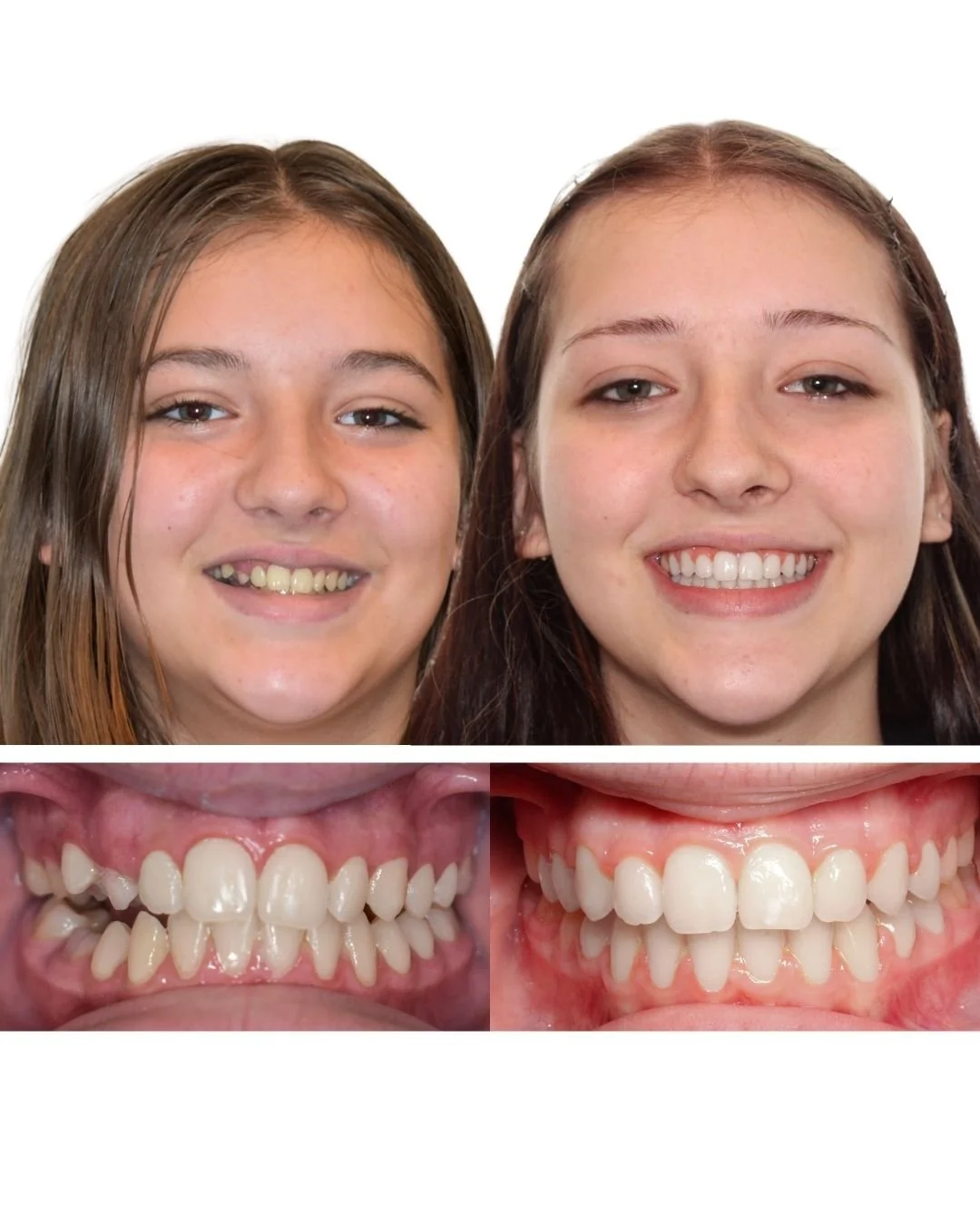
If you're considering Invisalign, you've probably noticed that both general dentists and orthodontists offer clear aligner treatment. You may even have seen Invisalign advertised at your regular dentist's office.
So, does it really matter who provides your Invisalign treatment?
Yes, both dentists and orthodontists can provide Invisalign. However, the biggest difference is the training and experience they bring to diagnosing orthodontic problems and planning tooth movement.
Invisalign is a tool used to straighten teeth, but the aligners themselves are only one part of your treatment. The provider planning and overseeing your care plays an important role in how your teeth move, how your bite fits together, and whether your treatment goals can be achieved.
Before deciding where to get Invisalign, here's what you should know.
Can a Regular Dentist Do Invisalign?
Yes! General dentists can provide Invisalign treatment after completing the necessary training to become an Invisalign provider.
In fact, many general dental practices offer clear aligners alongside routine dental services such as cleanings, fillings, crowns, and cosmetic dentistry.
For patients who already have a trusted relationship with their dentist, the convenience of receiving Invisalign treatment at the same office may be appealing.
However, being trained to provide Invisalign is not the same as completing an orthodontic specialty residency.
While both dentists and orthodontists graduate from dental school, orthodontists complete an additional two to three years of specialized education focused on tooth movement, jaw alignment, and bite correction.
This distinction is particularly important when considering treatment that involves more than simply straightening a few visible teeth.
For a broader explanation of these qualifications, read our guide to the differences between a dentist and an orthodontist.
Invisalign Dentist vs. Orthodontist: What's the Difference?
Although both types of providers may use the same Invisalign aligner system, their professional training is different.
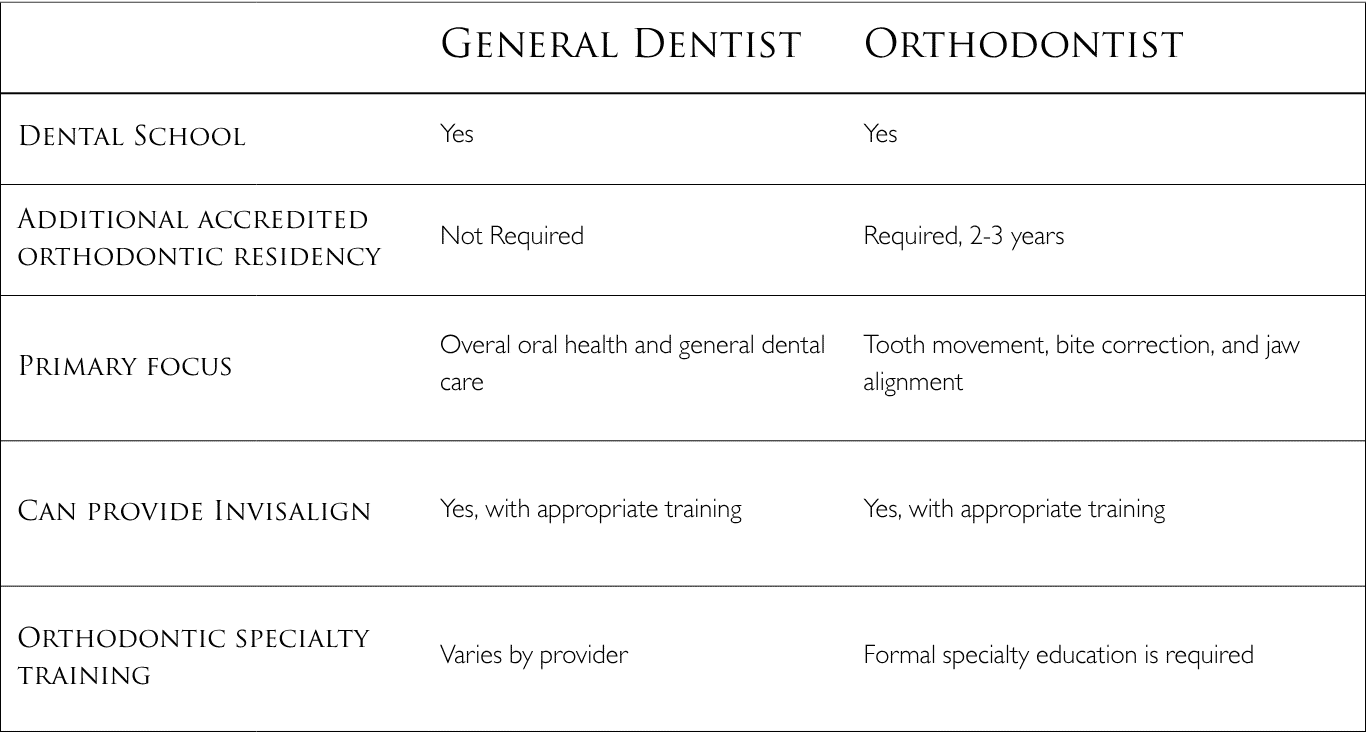
According to the American Association of Orthodontists, orthodontists receive extensive education beyond dental school specifically focused on how teeth move and how the upper and lower jaws work together.
This doesn't mean a general dentist cannot successfully treat patients with Invisalign. Many do.
The difference is that orthodontists have completed additional formal specialty training in diagnosing and treating orthodontic problems, including cases involving more complicated tooth movements and bite concerns.
Why Does an Orthodontist's Training Matter for Invisalign?
One of the most common misconceptions about Invisalign is that the aligners do most of the work.
In reality, successful orthodontic treatment requires much more than creating a series of clear plastic trays.
Invisalign is the appliance. Your provider is responsible for the diagnosis, treatment plan, and clinical decisions along the way.
Before beginning treatment, your provider needs to evaluate several important factors.
1. It's About More Than Straight Teeth
When you look in the mirror, you probably notice the alignment of your front teeth first.
But your bite involves all your teeth, including how your upper and lower teeth meet when you close your mouth.
For example, a patient might want Invisalign to correct a small gap between their front teeth. However, an orthodontic examination could reveal an underlying bite issue that also needs to be considered.
Simply closing the visible gap may not address the entire orthodontic concern.
Orthodontists are specifically trained to evaluate these relationships and incorporate them into a comprehensive treatment plan.
2. Every Tooth Movement Needs a Plan
Invisalign uses a series of custom-made clear aligners to gradually move teeth into new positions.
Before those aligners are manufactured, your provider develops a digital treatment plan outlining the intended movements.
This involves considering how teeth should move, whether sufficient space exists, how the roots are positioned, and how the final bite should fit together.
Invisalign's digital planning software helps providers visualize and develop treatment plans, but the technology doesn't replace clinical judgment.
Your provider must determine whether the proposed movements are appropriate and make adjustments when necessary.
3. Your Treatment May Need Adjustments
Even with detailed planning, teeth don't always move exactly as anticipated.
During Invisalign treatment, your provider monitors progress and determines whether modifications are needed.
Depending on your individual case, this could involve additional aligners, attachments, elastics, or changes to the treatment plan.
An orthodontist's specialty training focuses extensively on evaluating tooth movement and managing orthodontic treatment as it progresses.
4. Invisalign Isn't Always the Best Treatment Option
Clear aligners can address a wide variety of orthodontic concerns, including crowding, spacing, and certain bite problems.
However, Invisalign isn't necessarily the best option for every patient.
Some tooth movements or more complex orthodontic problems may be treated more predictably with braces or a combination of approaches.
Because orthodontists specialize in multiple methods of correcting tooth alignment and bite problems, they can evaluate which option makes the most sense for your individual needs.
At Beecroft Orthodontics, we offer both Invisalign clear aligners and braces, allowing us to recommend treatment based on your orthodontic needs rather than limiting you to one appliance.
Is Invisalign Cheaper at a Dentist or Orthodontist?
Another common question is whether receiving Invisalign from a general dentist costs less than treatment with an orthodontist.
Not necessarily. Invisalign isn't automatically more expensive at an orthodontic office.
The cost of treatment depends on several factors, including the complexity of your case, anticipated treatment length, the type and scope of Invisalign treatment prescribed, and the provider's fees.
A shorter, limited treatment plan may cost less than comprehensive Invisalign treatment, regardless of whether it's provided by a dentist or orthodontist.
When comparing quotes, it's important to make sure you're comparing the same type of treatment.
For example, one estimate might include limited tooth movement, while another includes comprehensive treatment addressing both alignment and bite concerns.
Before making a decision based on price, ask what's included in your proposed treatment plan, whether additional aligners or refinements are covered, and what expenses you may have after treatment.
At Beecroft Orthodontics, we offer complimentary consultations, flexible payment options, and 0% interest in-house financing. We also work with many dental insurance plans to help patients understand their available orthodontic benefits.
You can learn more about our Invisalign costs and payment options or review our financial information.
What Questions Should You Ask Before Choosing an Invisalign Provider?
Whether you're considering Invisalign through your regular dentist or an orthodontist, you should feel comfortable asking questions before committing to treatment.
Here are a few worth discussing during your consultation:
What are your qualifications and experience with Invisalign? Ask whether your provider is a general dentist or an orthodontic specialist.
Will my treatment address my bite as well as my visible teeth? Understanding your diagnosis can help you evaluate the proposed plan.
Am I a good candidate for Invisalign? Ask whether braces or another approach might be more appropriate for your needs.
Who will monitor my progress? Find out how appointments, treatment adjustments, and unexpected concerns will be handled.
What's included in the quoted fee? Ask about refinements, retainers, follow-up care, and available financing.
A good consultation should leave you feeling informed about both your treatment options and the provider responsible for your care.
Should You See an Orthodontist Before Getting Invisalign?
If you're thinking about Invisalign, scheduling an orthodontic consultation is a worthwhile first step, even if your general dentist already offers clear aligners.
An orthodontist can evaluate your teeth and bite, explain whether Invisalign is appropriate, and identify concerns that may affect your treatment plan.
You don't need to wait for a referral from your regular dentist to schedule an orthodontic consultation.
And seeing an orthodontist doesn't mean you need to stop visiting your dentist.
In fact, your dentist and orthodontist serve complementary roles throughout treatment. Your dentist continues to monitor your overall oral health, while your orthodontist focuses on tooth movement and alignment.
The goal isn't to choose between having a dentist and an orthodontist. It's to receive the right care from the right provider.
Why Choose Beecroft Orthodontics for Invisalign in Fredericksburg or Stafford?
At Beecroft Orthodontics, we believe Invisalign treatment should begin with a thorough understanding of your smile, not simply a set of aligners.
Our orthodontic team evaluates your teeth, bite, and treatment goals to determine which approach is appropriate for your needs.
Dr. Matthew Beecroft is a board-certified orthodontist who completed his orthodontic residency at Vanderbilt University, where he served as chief resident.
Board certification through the American Board of Orthodontics is a voluntary credential that reflects an additional commitment to specialty standards and continued professional development.
With convenient offices in Fredericksburg and Stafford, Virginia, Beecroft Orthodontics provides personalized orthodontic treatment for teens and adults considering Invisalign.
Our complimentary consultations include an orthodontic evaluation, digital scanning, a discussion of treatment options, and a review of pricing and financing.
Whether Invisalign is the right choice or another treatment would better address your needs, our goal is to help you understand your options before making a decision.
If you're actively searching for a local provider, you can also read our guide to choosing an Invisalign orthodontist in Fredericksburg, VA.
Frequently Asked Questions About Invisalign Dentists and Orthodontists
Is an orthodontist better for Invisalign than a dentist?
Orthodontists have additional specialty training focused specifically on tooth movement, bite correction, and jaw alignment. This training can be particularly valuable when evaluating complex orthodontic needs. However, both qualified general dentists and orthodontists can provide Invisalign treatment, and outcomes depend on your individual case and treatment planning.
Can I get Invisalign from my regular dentist?
Yes. If your general dentist is trained to provide Invisalign, they may be able to offer treatment. You can also choose to consult an orthodontist for a specialist's assessment before beginning.
Does Invisalign work the same at a dentist and an orthodontist?
Both providers can use the Invisalign system, but the diagnosis, treatment plan, and clinical decisions are made by the individual provider. Treatment approaches may differ based on your orthodontic needs and the provider's training and experience.
Can an orthodontist fix Invisalign treatment that didn't work?
If you've already completed Invisalign and aren't satisfied with the results, an orthodontist can evaluate your current alignment and bite. Depending on your situation, additional clear aligner treatment, braces, or another approach may be recommended. An examination is necessary to determine what's appropriate.
Do I need a referral to see an orthodontist for Invisalign?
No. In most cases, you can schedule an Invisalign consultation directly with an orthodontic office. Some insurance plans may have specific referral requirements, so check your coverage if you're unsure.
Considering Invisalign? See an Orthodontist First.
Choosing Invisalign is an important decision, but choosing the right provider is just as important.
Both general dentists and orthodontists can offer Invisalign. The difference lies in their training, experience, and approach to diagnosing and treating orthodontic problems.
Before beginning treatment, consider having your smile evaluated by an orthodontic specialist who can help you understand the full picture.
At Beecroft Orthodontics, we're here to answer your questions and help you explore your options for a healthier, more confident smile.
Schedule your complimentary Invisalign consultation at our Fredericksburg or Stafford office today.